
Great marriages are built brick by brick, day after day, over a lifetime.
President Dieter F. Uchtdorf, The Church of Jesus Christ of Latter Day Saints
Great marriages are built brick by brick, day after day, over a lifetime.
President Dieter F. Uchtdorf, The Church of Jesus Christ of Latter Day Saints
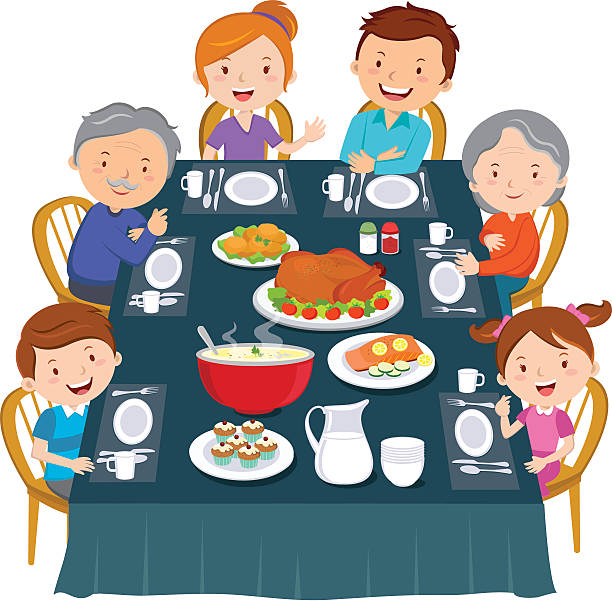
My husband and I got married when we were both 20 years old. Little did we know that the unspoken rules of each of our families, also known as implicit rules, would need to be navigated in our new marriage. He didn’t call his parents to check in, I called and checked in regularly with mine. I only took a small portion of the food for my first helping at dinner, leaving enough for seconds, and he would take as much as possible the first time around. When he sneezed, I said, “bless you.” When I sneezed, he never noticed or said, “bless you,” which I thought was rude. At my house growing up, dishes were done every night after dinner by my father. At my husband’s house growing up, one person was assigned each night to do all the dishes by themselves. In the house I grew up in, emotions were okay, but in my husband’s house, showing emotions was a sign of weakness.
So as our marriage went on, dishes piled up, sneezes went unnoticed, feelings were hurt and emotions were stifled. The households we grew up in were vastly different. I grew up in a three-person household and was the only child (I had sisters who were already grown when I came around). My husband on the other hand, was the oldest of five kids and grew up in a seven person household, but at times had up to twelve people living at his house at one time. This is probably where each of our implicit rules clashed with one another. The longer we were married, we started making our own “family rules” and things started to go better. I can now proudly say that we no longer let our dishes sit in the sink dirty for more than a day. We learned to work together!
It wasn’t actually really until tonight when I started writing this, that my husband and I really discussed the “family rules” each of us had to learn when we first came into our marriage. It was fun to look back and see how far we have come.
“Implicit family rules often have the greatest impact on our lives. Implicit rules are those taught through nonverbal communication and repeated throughout childhood…(they) tend to be just below conscious awareness, so we seldom recognize we are following them until someone points it out to us,” (Poduska, pg. 27).
Looking back, I wish that I had even known to look for the family rules that I had or my husband’s family followed. I made a note to myself to talk to my kids about it when they are old enough to be thinking about marriage. I have been thinking about the unspoken rules we have in our family now. A few that I know we have are: don’t eat before prayer, always say please and thank you (this one does get talked about frequently though), take your shoes off before entering other people’s homes, always use the term “Brother or Sister” or “Mr. or Mrs.” to adults if you are a child and probably my kids would say, “don’t make mom mad.” I hope the impact of our family rules have a positive impact instead of negative on my children. I know that from now on, I will hopefully be more aware of what they are and what I things I am portraying as “important” to my children. Last week I sneezed and my little two-year-old piped up with a, “bless you!” and I thought to myself, well at least I am doing something right.

One of the things we read for this week in my marriage class that I am taking at BYU-Idaho, was about power in relationships and the partnership between husband and wife. I loved this quote from Zig Ziglar, who was an American motivational speaker that always seemed to have great things to say. He said:
“Many marriages would be better if the husband and the wife clearly understood that they are on the same side.”
When I read that, I felt like that really summed up most of the arguments my husband and I have had in our marriage. It is so easy to become defensive and need to be the one who is correct or win the argument, that we forget that we are working towards the same things. Husbands and wives are working towards the same goals for their families, but it is easy to get side-tracked.
One thing that my husband and I struggled with when we were first married was figuring out who was going to do what. We both worked full-time and my husband went to school. We had our first child two years into our marriage. One year after that, the recession hit. My husband lost his job and I took a job as a police dispatcher working all hours of the clock to help our family make ends meet. My husband was still going to school full-time and luckily was able to find another job, but we never saw each other. It was hard to be on the same page as a couple or as parents. What helped us most was time and forgiveness. Trying to see the other person do the best they can and doing the best that we can as well.
“In the marriage companionship there is neither inferiority nor superiority. The woman does not
walk ahead of the man; neither does the man walk ahead of the woman. They walk side by side” (Miller, 2008, pg. 3).
Now, we have been married 14 years and have 4 children. We have learned that we can’t pull each other in different directions, because that will get you nowhere. It is much easier to work together and help each other in the direction they are going. Being married is truly a partnership.

This week for the marriage class I am taking at BYU-Idaho, I studied the importance of physical intimacy within a marriage and also about the dangers of infidelity. It made me think about the times we are living in and how different they are from even 15 years ago when I was a teenager. I thought about my kids and pondered what I really want them to know and understand as they grow up and start having relationships and hopefully marriages someday.

People struggling with morality and infidelity is not a new thing for our time, there are plenty of examples in the Bible that show it has often been a weakness in human nature. Even so, today is different. As a parent I know that we are waging a war with Satan for the souls of our youth. One of the biggest fights we have right now as parents is protecting our children from pornography. That is that I want my kids to know is about the dangers of pornography. In a talk by Elder Dallin H. Oaks, a leader for The Church of Jesus Christ of Latter Day Saints, he explains, “Pornography impairs one’s ability to enjoy a normal emotional, romantic, and spiritual relationship with a person of the opposite sex. It erodes the moral barriers that stand against inappropriate, abnormal, or illegal behavior…(it) is also addictive. It impairs decision-making capacities and it ‘hooks’ its users.” I want my children to know that it will has the power to destroy not only themselves but also relationships. Pornography, “has the effect of damaging hearts and souls to their very depths, strangling the life out of relationships” (Liahona and Ensign, Nov. 2004, 60).
The second thing I want my kids to know is that it is important to have healthy sexuality. In the article, The Twain Shall Be One: Thoughts on Intimacy in Marriage, author K.W. Matheson stated, “Sexuality is a beautiful power given to mankind from God. President Kimball has observed: ‘The Bible celebrates sex and its proper use, presenting it as God-created, God-ordained, God-blessed. It makes it plain that God himself implanted physical magnetism between the sexes for two reasons: for the propagation of the human race, and for the expression of that kind of love between man and wife that makes for true oneness.” I want my kids to know that when they are married, that having an intimate relationship that includes both emotional and physical connection is important, and that it strengthens marriages.
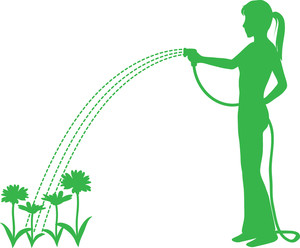
The last thing that I want my kids to understand when they are married is that, “the grass is greener on the side of the fence you water” as quoted in the book, Drawing Heaven into Your Marriage. I want them to be prepared for Satan’s attacks on their marriages and them that, “he offers love, fun and satisfying life. But it is a lie. He wants to get us to violate our covenants” (Goddard, 95). He will try to make the other side of fence look appealing by telling them lies such as, “Maybe you were never supposed to be married”, “marriage is too hard”, or “you don’t love each other anymore.” His goal is to destroy families. Don’t fall for those lies. “As usual, Satan’s lies are extravagant- but empty. In contrast God’s promises are sure. When we…quietly honor our covenants- even making sacrifices and fighting temptation- God will reward us with blessings unfathomable to those who have grabbed pleasure over principle” (Goddard, 96). Watering the grass on your side of the fence is how you treat your spouse. Kindness, love and affection are all things that will keep the grass green.
Being married isn’t easy. Satan tries his best to get us to fail. He trips people up with things like pornography, misguided sexuality and infidelity. Marriages are being destroyed by these things left and right. I do know it is possible to withstand these things and work through them if they do affect your marriage. More than Satan wants us to fail, Christ is there to help us win. Even if we stumble, He is there to help us back up. He can not only help us through the gift of His Atonement, but He can save and heal marriages. It is easier to not go down these roads though. It will save a lot of heartache to avoid them. That is why I hope to teach my children these principles so that they don’t have to struggle or endure these particular pains of life, so that they can have healthy and happy relationships in the future.

I just finished reading two books for my Marriage class I am taking at BYU-Idaho. The first one was “The Seven Principles for Making Marriage Work” by Dr. John M. Gottman. This week I learned about gridlock in marriage and how to overcome it. Gridlock happens when couples have irreconcilable differences and they can’t find a way to accommodate those differences. Gottman explained that you know are in gridlock if you, “have the same argument again and again with no resolution, neither of you can address the issue with humor, empathy, or affection, the issue becomes more polarized over time and lastly if compromise seems impossible…(like you are) giving up something important and core to your beliefs.” The thing I learned about gridlock is that you don’t have to solve the problem to get past it. Dr. Gottman said that, ” the goal is to be able to acknowledge and discuss the issue without hurting each other.” He said that in order to get out of gridlock, “you have to understand that no matter how seemingly insignificant the issue, gridlock is a sign that you each have dreams for your life that the other isn’t aware of, hasn’t acknowledged or doesn’t respect.”
The second book I finished for my class this week was “Drawing Heaven into Your Marriage” by Dr. HW Goddard. The final chapter in the book was about charity. He explained that one of the most important qualities we need to have is charity. Charity may be the most important quality we can have in a marriage or any relationship. Charity comes from Christ and we have charity as we learn to love as He does. Dr. Goddard said, “As we feel the love from Him and for Him, we naturally love like Him.”
Taking the two final concepts from what I read this week, gridlock and charity go hand in hand. Charity is what can open the gates of gridlock. Instead of getting caught up with arguments and issues that we cannot get past by ourselves, we can call upon the Savior to help us have charity. Dr. Goddard said, “At every critical juncture we can choose compassion…understanding, patience, and personal growth.”
It is hard to have charity when we are wrapped up in a blanket of hurt and negativity. When we forget to take time to see our spouse in a positive light, forgetting their good qualities, and highlighting their bad, we only see them as selfish and uncaring. The problem with gridlock is that we think that we have to have everything “just right” and fix the problem to get over it. Some problems are small and silly such as who should have done the dishes or can be heartbreakingly devastating such as infidelity or pornography usage. That is where charity comes in. That is where the Atonement of Christ can help people heal past wounds. We simply cannot do somethings by ourselves and need to call upon the Savior for help.
So how do we get charity? The answer in Dr. Goddard’s book is:
“Wherefore, my beloved brethren, pray unto the Father with all the energy of heart, that ye may be filled with this love, which he hath bestowed upon all who are true followers of his Son, Jesus Christ…Charity comes only when we humbly recognize the weakness of our mortal natures and throw ourselves on the merits, and mercy, and grace of the Holy Messiah.”
There was a time in my marriage that I had to ask for that healing power of Christ’s Atonement to help me be able to see my husband with the eyes of Christ. It was hard to ask for that help, but when I finally did, I was blessed to be able to see him for the great person that he is and the potential that he has.
Charity comes into marriage as we strive to see our partner for their best self, not their worst. It is seeing them as through the eye’s of Christ. We can overcome gridlock and hurt in a marriage as we strive to have charity. As we become better at giving each other the blessing of love, forgiveness and charity, marriages and lives will be strengthened.

This week in the marriage class I am taking at BYU-Idaho, I spent the week reading about problems that arise in marriage. In one book we are reading, “The Seven Principles of Making Marriage Work,” Dr. John Gottman said:
“We have found that all marital conflicts, ranging from mundane annoyances to all-out wars, really fall into one of two categories: either they can be resolved, or they are perpetual, which means they will be a part of your lives forever in some form or another.”
Dr. Gottman then explained that 69% of marital conflicts fall into the “perpetual” category. I reflected a lot this week on my marriage and the struggles and triumphs we have had. There have been many resolvable issues and some perpetual ones. We have had conflicts that have spanned the years of our entire marriage. It is kind of embarrassing to admit that, but I don’t mind, because I have learned a lot from it and I think my husband would say so as well. I think one thing we have both really struggled with and the hardest to learn, is how to forgive, which I think is the ultimate key for making a marriage work.
Part of this week’s readings in my class included a General Conference talk by Elder James E. Faust titled, “The Healing Power of Forgiveness”. In part of his talk he said:
“Forgiveness if freeing up and putting to better use the energy once consumed by holding grudges, harboring resentments, and nursing unhealed wounds.”
Forgiving my spouse of the things he has done, big or small, has taken a long time to learn how to do, and I am still learning with some things. I know that I have worn my hurt as a badge of pride almost, expecting to be treated different somehow because I thought my husband was the one in the wrong. What I learned was that it didn’t help anything and most of all, it only made me more bitter, resentful and angry. Elder Faust said:
“We need to recognize and acknowledge angry feelings. It will take humility to do this, but if we will get on our knees and ask Heavenly Father for a feeling of forgiveness, He will help us. The Lord requires us ‘to forgive all men’..It is not easy to let go and empty our hearts of festering resentment. The Savior has offered to all of us a precious peace through His Atonement, but this can come only as we are willing to cast out negative feelings of anger, spite, or revenge.”
Becoming humble enough to stop being angry and resentful towards a spouse who has hurt you is hard, but like Elder Faust spoke of, you don’t have to do it alone. By asking for help from above, the healing power of the Atonement can heal all wounds. I have seen it happen in my own life and marriage. One of my favorite quotes in regards to the Atonement of Jesus Christ is from a BYU Devotional by Brad Wilcox who said, “Jesus doesn’t make up the difference, Jesus makes all the difference.”
“Love is not a happy accident; it is a choice” (Goddard, pg. 83)

After being married for 14 years now, I can attest to the truthfulness of the above quote. One of the choices we make regarding love, is to love our spouse. It is easy in marriage to get annoyed with little things our spouse does or offended by something they say. We often think more of ourselves and how we feel, how right we are, and how wrong our spouse is. We get self-centered and prideful. It is hard to love when that is the attitude we have. In the book, “Drawing Heaven into Your Marriage”, author H. Wallace Goddard said:
“Many Americans today can no longer accept the idea that love requires sacrificing oneself or making oneself unhappy or doing things that do not (at least eventually) serve one’s individual best interests. If a relationship does not bring pleasure, insight, satisfaction, and fulfillment to the self, then it is regarded as wrong, and the individual is justified perhaps even obligated-to end the relationship and find a new, more fulfilling one. According to today’s values, A ‘kind of selfishness is essential to love’.”
I myself have fallen into the trap of self-entitlement and pride-fullness that can lead to unhappiness and the destruction of marriages. One example of how I have done this is believing that my spouse needs to do something special for me on days like my birthday. Near the beginning of our marriage on my birthday, my husband brought me home flowers. That was what he got me for my birthday and I was hurt and mad that it was all he got me. I could have told him kindly that he kind of hurt my feelings because I didn’t see flowers as being a present, but instead I was really rude to him and it only stirred up contention and contempt in our home. It is so silly looking back, but at that time, I was too prideful to let my hurt go and see that he didn’t mean to hurt my feelings.
“Satan will laugh us into conflict and misunderstanding unless we yield to the enticings of the Holy Spirit and put off the natural man… The scene is set for the battle because of our pride. Pride includes our own attunement to our own needs as the standard of judgement”(Goddard).
In a talk given by President Ezra Taft Benson, who was a leader for the Church of Jesus Christ of Latter Day Saints, he warned of pride. He said that, “The central feature of pride is enmity-enmity toward God and enmity toward of fellowmen. Enmity means ‘hatred toward, hostility to, or a state of opposition.’ It is the power by which Satan wishes to reign over us.” It is that enmity which pits people against their spouses and causes contention. “Contention in our families drives the Spirit of the Lord away. It also drives many of our family members away” (Ezra Taft Benson, 1989).
“Satan laughs at every step of this dismal process (pride within a marriage), he must take special delight when people who have promised to bless and encourage each other, throw their best efforts into hurting and defeating each other” (Goddard, pg 72).
So what can we do when all the forces seem to be pushing against us? We can choose to be forgiving of our spouse and see try to see the best in them. We can choose to look past how something was said that sounded negative, and try to see what our spouse is really needing. We can choose every day to use the Atonement of Christ in our lives to help us heal old wounds and be able to see a spouse in the way that Christ sees them. If we do all of these things, we can be free of the pridefulness, enmity and contention that destroys marriages. Love that lasts does not come by accident, it is chosen everyday as we work to become better people and spouses.

My mom used to sing the song, “There’s a Hole in My Bucket” often when I was a little girl. Instead of singing it “dear Liza”, she sang it “dear Alice”, like my Grandpa Henry did. He passed away when I was three so it is a good memory that reminded me of him. If you know the whole song, the couple that is singing is solving the problem of the hole in the bucket. It is kind of a silly example, but I like how even though it is something so simple, they both spoke kindly to one another, especially the wife. It is an example of turning towards one another instead of turning away.
In Dr. Gottman’s book, “The Seven Principles of Making Marriage Work, ” he explains that turning towards your spouse in small ways is much important than large gestures. He said that: “Turning toward each other is simply to be aware of how crucial these mini-moments are…For many couples, just realizing that they shouldn’t take their everyday interactions for granted makes an enormous difference in their relationship.”
In marriage, couples make what Dr. Gottman calls “bids” for each other’s attention, affection, humor or support. He says,” bids can be as minor as asking for a backrub or as significant as seeking help in carrying the burden when an aging parent is ill. The partner responds to each bid either by turning toward the spouse or turning away.”
Sometimes bids for attention can be disguised because they are said with anger or a negative emotion. It is hard to see that the other person is making a bid when things start off harshly. Dr. Gottman suggests to, “pause for a moment and search for a bid underneath your partner’s harsh words. Then, focus on the bid, not the delivery.”
This past week I have been focusing on turning towards my spouse and recognizing his “bids” for attention. I also have been trying to see the bids my children make as well. The bids I have noticed have been mainly needing more one on one time with me. I get so busy that I forget to take time for my husband or each if my kids individually. Everyone in our lives make bids for something they need from us. I have enjoyed paying closer attention to this part of daily interaction and I have seen improvement in my relationships as I have taken more time to focus on each person individually.
In the book “Drawing Heaven into Your Marriage,” by H. Wallace Goddard, it has a good example of what turning towards each other is: “As we turn from the ways of the natural man to the ways of Christ, we will respond to our challenges differently. Instead of judging our partner, we will invite Christ to soften our hearts and fill us with goodness.”
I know that turning towards my spouse can and does strengthen our marriage. I am not perfect but I will continue to strive to respond positively to his bids for attention by turning towards him, even if he has a list of silly questions about fixing the hole in a bucket.
This week is Valentine’s. My husband and I never go on a date for the actual day and we rarely do anything “romantic” for it at all. This will be our 14th married Valentine’s together. I do confess to being cranky in the past about the lack of romance my husband in particular puts towards these types of occasions. What woman doesn’t want a dozen roses and a fancy candle-lit dinner? The only candle-lit Valentine’s dinner we have ever had was in our first year of marriage. I made artichokes and my husband cooked steak. I also made us a chocolate cake. It was lovely.
13 years later, we are still happily married despite the lack of the special romantic evenings I had dreamed of before we got married. While those types of occasions are nice, it is not what makes a lasting and strong marriage. This week I was reading part of a book called, “The Seven Principles for Making Marriage Work”, for the class I am taking at BYU-Idaho. This week I read about love maps and what they mean for a marriage. A love map is a, “term for the part of your brain where you store all of the relevant information about your partner’s life…(couples) remember major events in each other’s history, and they keep updating their information as the facts and feelings of their spouse’s world change.” The importance of a love map is that it helps couples weather the storms and changes of life. Author Dr. John M. Gottman stated that, “Couples who have detailed love maps of each other’s world are far better prepared to cope with stressful events and conflict.” One thing that I learned about love maps, is that if you don’t have a strong love map right now, that it is something you can work on and strengthen. Getting to know your spouse better will strengthen and fortify your marriage.
I wasn’t even sure if my husband and I had a “strong love map” anymore. Luckily, in the marriage class I am taking along with reading Dr. Gottman’s book, we were also assigned to complete some of the exercises in one of the chapters. In chapter 5 of “The Seven Principles of Making a Marriage Work”, it focuses on nurturing fondness and admiration of each other. As my husband and I went through and discussed the exercises together, it brought smiles to both of our faces as we expressed love and appreciation for each other. I look forward to completing more of the exercises and strengthening our “love map” and marriage.
I know that working on strengthening a marriage can be difficult and awkward at first sometimes. Making a marriage work isn’t always about the big events that happen, but often just all the little things put together each day that make up a lifetime together.
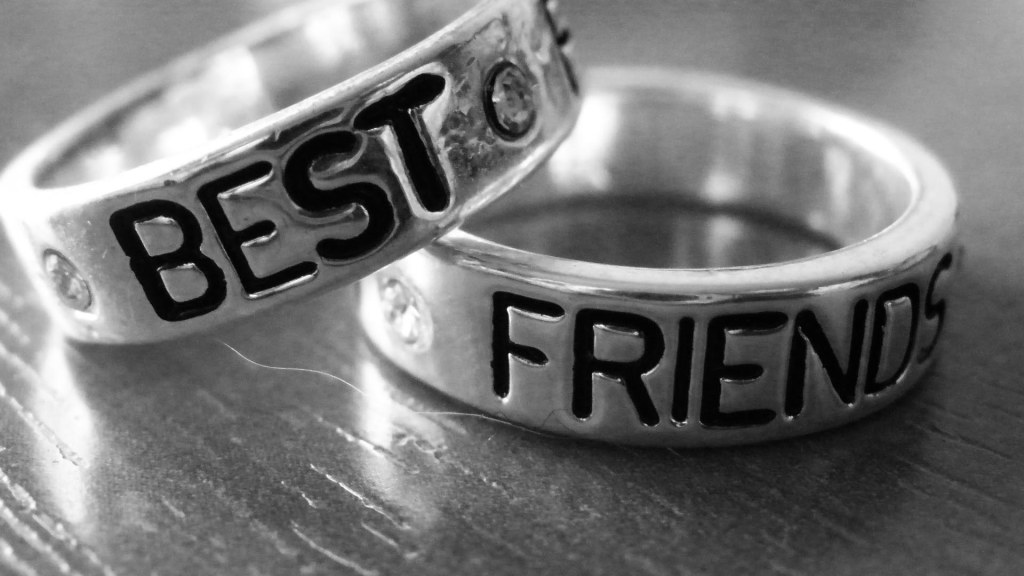
My husband and I have known each other since we were 12. Well, sort of. We went to the same middle school and I “saw him around” the 6th grade hall. Him and his friends were always messing around. In 7th grade, we had an art class together. A girl at my table was “going out” with him, whatever that meant, but their relationship didn’t last very long before she dumped him. In 8th grade, I remember staring at the white board in my Spanish class at my future husband’s name that was written on the board. He wasn’t in my class, but there was just something about his name that stuck out. In 9th grade, we had Seminary together. I sat behind him due to our last names being close alphabetically. He was annoying and wouldn’t even turn around to pass papers back to me. He had a yellow and gray fuzzy vest that he wore everyday that I hated. In 10th grade I was chatting with a friend about crushes and she disclosed that she liked a certain boy (my future husband). He was in my Spanish class that year and I sat directly behind him, so told her I would see if he wanted to meet up at the football game with her! Well, he half committed and never showed up to one game. Later that school year, my mom was dropping me off for my first day of drivers ed. Just as I was about to get out of the car, a boy walked by and as we saw each other, the biggest grin came across his face. My mom said something like, “Did you see the smile on his face? Looks like he is excited to see you!” I think I said something like, “Oh, huh, I didn’t notice…” But I had. That boy became my best friend and eventually my husband.
I am currently taking a marriage class through BYU-Idaho. We are just starting to read the book, “The Seven Principles of Making Marriage Work”, by John Gottman. A year or two ago, I tried to read the book on my own, but was discouraged with the beginning and never finished it. I was discouraged because in the book the author tells of different situations where he has been able to predict whether a couple would stay together or get divorced. He tells of six signs that are indicators that things in a marriage are not going well. The 6 signs are: Harsh Start-up, The Four Horsemen, Flooding, Body Language, Failed Repair Attempts, and Bad Memories. Until starting this book again, I had forgot about all the signs except for The Four Horsemen. This is where I got hung-up before, because when I read about it, I felt like our marriage at the time had all four of them. The Four Horsemen are: Criticism, Contempt, Defensiveness, and Stonewalling. I stopped reading, I felt like we were doomed.
Our marriage has improved since that time, but I wish that I had continued to read John Gottman’s book because of what I read today. Gottman said that even in marriages where the Four Horsemen are present, that if a couple has a strong friendship, that they will most likely make it. Of marital friendships he said, ” Happy marriages are based on a deep friendship…a mutual respect for and enjoyment of each other’s company.” He said that, “Friendship fuels the flames of romance because it offers the best protection against feeling adversarial toward your spouse.”
I am grateful for the friendship that I have developed with my husband over the years. We have had many fights and disagreements, but he has always been my best friend. Marriage is hard. In another book I read for my class this week titled, “Drawing Heaving into Your Marriage”, author H. Wallace Goddard says:
“But what is God’s purpose for marriage? Did God design marriage as a refuge-a safe haven-from a troubled world? Or did He design marriage as a laboratory where each of us could conduct daily experiments in gospel living? Or did he design marriage as a spiritual challenge course to humble us, stretch us, and refine us? Yes, to all of the above…marriage is sometimes a refuge from the storm. At other times marriage is the storm…”
There is no one I would rather weather the storms of life with than my husband.
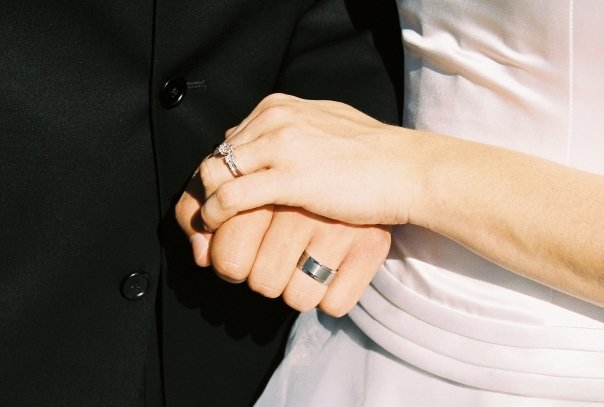
When my husband and I got married we were young, naïve and in love. We thought that our love would get us through anything and no one had told us otherwise. What we found is that a marriage takes not only love but also requires work. Being married isn’t each person giving 50% towards the marriage, it is both people each giving 100%. Elder Bruce C. Hafen, a leader in the church I belong to (The Church of Jesus Christ of Latter Day Saints), said:
“Contract companions each give 50, covenant companions give 100 percent…Covenant marriage requires a total leap of faith; they must keep their covenants without knowing what risks that may require of them. They must surrender unconditionally, obey God and sacrificing for each other.”
One year into our marriage, we were able to be sealed together for time and all eternity in and LDS temple. Members of The Church of Jesus Christ of Latter Day Saints can be married in temples for all time. In order to do that, they need to be living certain standards before they can enter the temple. After we were sealed together, I thought something along the lines of, “Well, we made it! Should be all down hill from here right?” Well it was downhill in a manner of speaking, and then uphill and downhill again. Just because we had been married in the temple didn’t mean that we were without struggle. What I have learned is that Satan tries to destroy marriages and families. President Gordon B. Hinkley of The Church of Jesus Christ said:
““Perhaps our greatest concern is with families. The family is falling apart all over the world. The old ties that bound together father and mother and children are breaking everywhere. We must face this in our own midst. There are too many broken homes among our own. The love that led to marriage somehow evaporates, and hatred fills its place. Hearts are broken; children weep. Can we not do better? Of course we can. It is selfishness that brings about most of these tragedies. If there is forbearance, if there is forgiveness, if there is an anxious looking after the happiness of one’s companion, then love will flourish and blossom.”
It was broken hearts and selfishness that led my husband and I to seek marriage counseling for the second time. Towards the end of one session we attended, our counselor asked if we had ever heard the story of the two wolves? We had not. He passed us a paper with something similar to the following words, “There are two wolves fighting inside all of us. The first one is evil, the second one is good. Which won will win? The one you feed.” We learned that the “evil” wolf represented things like, “anger, envy, sorrow, regret, greed, arrogance, self-pity, guilt, resentment, inferiority, lies, false pride, superiority and ego.” The good wolf represented, “joy, peace, love, hope, serenity, humility, kindness, benevolence, empathy, generosity, truth, compassion and faith.” (Ref Link (Links to an external site.))
Elder Bruce C. Hafen also spoke of three “wolves” that destroy a marriage. The first one is natural adversity, the second is the wolf of people’s own imperfections, and the third is excessive individualism. I think that the third one is the cause of much of the heartache and suffering in marriages today. Elder Hafen went on to explain:
“The adversary has long cultivated this overemphasis on personal autonomy , and now he feverishly exploits it. Our deepest God-given instinct is to run to the arms of those who need us and sustain us. But he drives us away from each other today with wedges of distrust and suspicion. He exaggerates the need for having space, getting out, and being left alone.”
I myself have fallen for those same lies. It has taken a lot of work, prayer, good communication and time for my husband and I to be able to “run into each other’s arms” again, instead of turning away. I know that all marriages and relationships are capable of this though. As we start to try and understand one another, say we are sorry for past grievances and seek to forgive one another, we not only can run back to one another’s arms, but can also turn towards God and run back to His as well.
 Brick by Brick